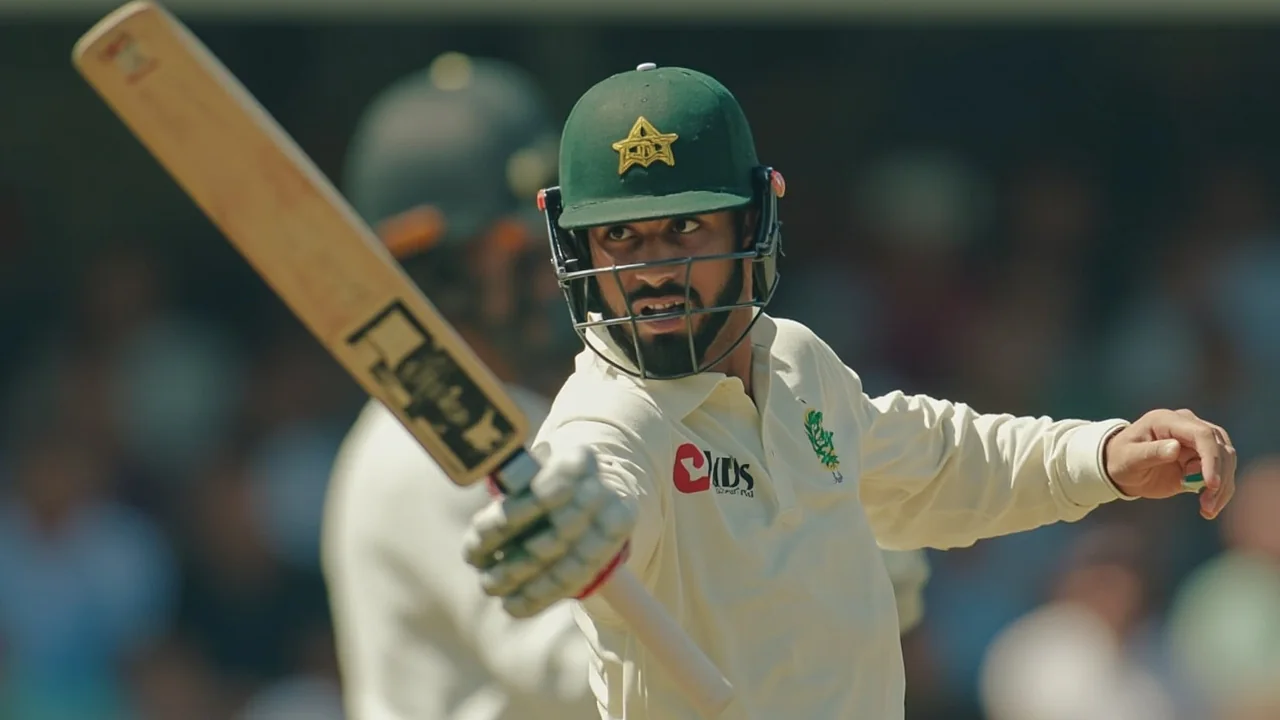
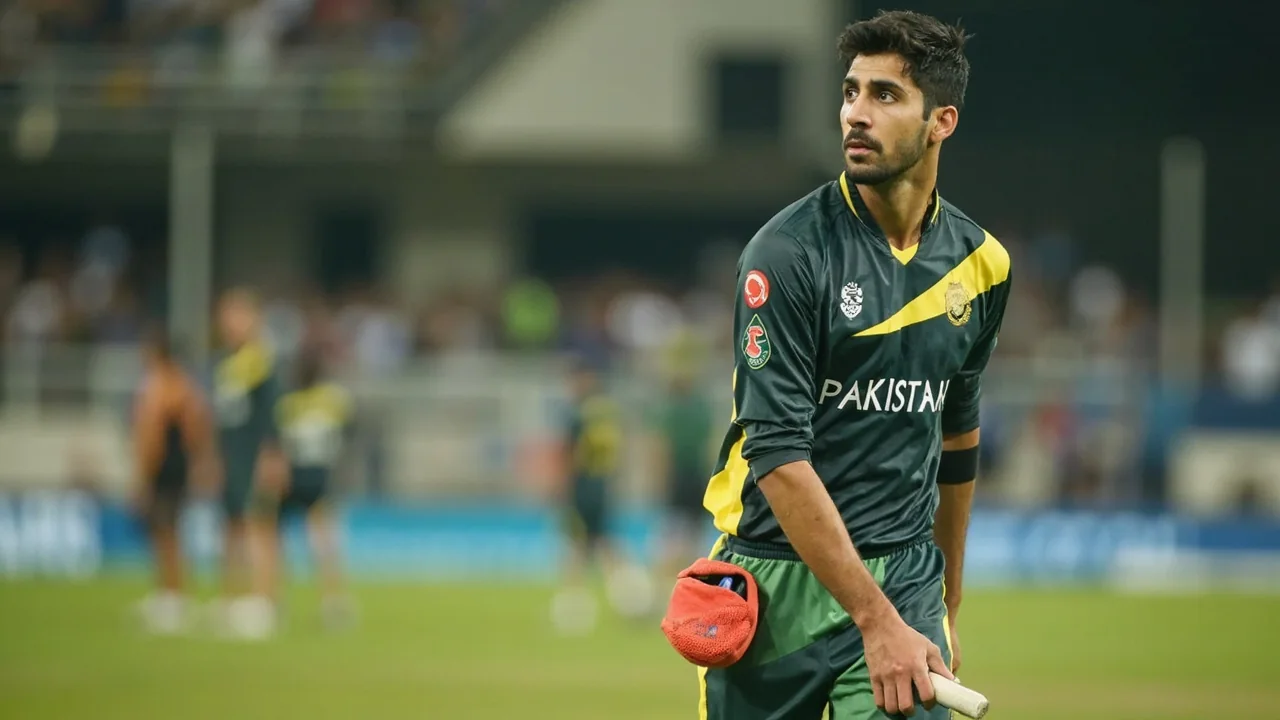
Mohammad Abbas urges ICC to give Pakistan more Test matches after Tarouba weather dents West Indies opener
Pakistan fast bowler Mohammad Abbas used his day-one briefing at the Brian Lara Cricket Academy to argue that the global Test calendar needs more room for Pakistan, the day rain wiped out a session and bad light cut the West Indies innings short at 194 for 3.
Compliance Notice: Casumo is a skill-based fantasy sports platform operating in India. This product is available only to users 18+ in permitted states. Fantasy sports involve skill and strategy; outcomes depend on real-world match performance. Please play responsibly. Check local regulations before participating.
Tarouba's day one belonged to two forces that rarely fight on a Test pitch: rain water and bad light. By stumps the second Test match in Pakistan's West Indies tour, the first at the Brian Lara Cricket Academy, had lost its first session to a heavy shower and never quite rebuilt momentum before the umpires pulled the players off. West Indies closed on 194 for 3 in 67 overs. Even in the truncated form the day took, Mohammad Abbas had enough of the match still fresh in his head to deliver a pointed message about Pakistan's place in red-ball cricket.
Speaking to media at the ground on 26 July 2026, Abbas asked the ICC to schedule more Test matches for Pakistan, framing regular red-ball cricket as essential for the team's growth and consistency. The appeal was not abstract. Pakistan will play two Tests on this tour, sandwiched around an ODI block, and the next multi-Test series on the calendar sits further down the line than the bowler's rhythm can comfortably absorb.
What Abbas asked the ICC for, and the reason he gave
Abbas's central argument can be stated in one line. Long gaps between Test series make it hard for a fast bowler to maintain rhythm, and Pakistan's current schedule gives him roughly six months between short two-or-three-Test blocks. Translated into training terms, that is two pre-seasons of red-ball match practice collapsed into long white-ball spells. His own performances often tilt across formats. The way to keep the Test side ready for tough tours, he said, is to keep them playing Tests.
That argument is not new. It has been raised by senior Pakistan cricketers before tours of Australia, England and South Africa in the last decade. What makes this week's version worth recording is the venue: Tarouba, on day one of an active Test, with the bowler's own over count still fresh in his legs. Abbas was not lobbying for an abstract calendar slot. He was pinpointing the rhythm gap that the next two Tests of this very tour are supposed to fill.
For readers interested in the wider cricket news run this week, the cricket news archive keeps match reports, schedule notes and editorial series in one place. Abbas's appeal sits naturally inside that stream, since it is about the space between Pakistan's matches more than it is about a single dismissal or partnership.
Abbas's case is partly a rhythm case: longer Test blocks give fast bowlers more honest workload than two-match bursts.
Tarouba day one: how rain and light reshaped the West Indies reply
The cricket on Sunday ran in two competing registers. Pakistan's seamers won the first hour whenever they could bowl, with the new ball asking questions of Kraigg Brathwaite and John Campbell that the surface answered unevenly. Then the weather intervened. The opening session was washed out by rain before a ball could be bowled in earnest. When play resumed after lunch, the West Indies batters accepted a slower tempo and rebuilt with Kavem Hodge and Shai Hope as the mainstays.
By the time bad light forced the players off for the final time, Hodge was still unbeaten on 83 with Shai Hope having added 39 earlier in the stand. The West Indies total of 194 for 3 in 67 overs tells one half of the story: the hosts were never allowed to run away, even though the rain interruptions handed them a smaller target number of legal deliveries to face. Abbas, in his briefing, pointed out that Pakistan had gained the upper hand in spells before rain broke their momentum. Close chances did not go Pakistan's way, including edges and a stumping opportunity that did not quite carry.
What the day did not produce was a result. Pakistan will restart on day two knowing that 67 overs is barely the length of two normal sessions in the West Indies, and that the hosts still have a long tail to manage when the quicks finally get a full crack. The longer the conditions swing back to a normal day, the more Abbas's case reads like a bowler hungry for exactly this kind of uninterrupted spell.
What Pakistan's bowlers did right before the break came
Pakistan's lengths on day one varied smartly rather than dramatically. The opening spell pitched the ball up just enough to make Brathwaite play, and once the bowlers discovered the seam movement off the full length, they held it through the middle session. Abbas himself produced two of the most testing overs of the day in the second and third hour, including a spell where Hodge survived an lbw shout that the bowler reviewed in vain. The new-ball pair built pressure through line, not by searching for short-pitched bowling in conditions that did not reward it.
The opposite camp on day one was Hodge. The left-hander has been one of the quieter successes of West Indies' middle order since his 2024 Test return, and his footwork against the moving ball was the difference between a nervous 50 and a flowing 80-plus. He left well outside off stump, used the depth of the crease to negate seam movement, and turned the bad-light stoppage into a chance to reset rather than a frustration. Abbas's comments afterward acknowledged that Hodge was the difference between Pakistan blowing through the top order and the West Indies closing day one with three wickets down.
For fantasy readers, the takeaway is narrower than the headline. A short, weather-truncated Test day rarely produces the kind of workload spike that the surface produces on a normal day. The big-picture trend to track across this tour is not the day-one Hodge innings but the question of whether Pakistan's seamers can stay accurate across days two, three and four on a pitch that will lose some of its early life.
Pakistan's tactical read on day one went through line and length. The real test comes when the ball stops talking as much off the surface.
The red-ball calendar around Pakistan: why six-month gaps hurt
Look at Pakistan's Test fixtures between now and the end of 2026 and the rhythm Abbas described becomes easier to see. The team plays two Tests in the West Indies this month, then a short ODI block. A Test series at home later in the year will be followed quickly by white-ball commitments. The actual count of five-day matches a fast bowler can expect to play in a calendar year sits in the low single digits, well below the workload of a comparable England or Australia seamer who plays six to eight Tests a year through bilateral series and the World Test Championship.
That gap shows up in two places. First, in match readiness: bowlers returning from a long break often take a Test or two to find their length and confidence. Second, in squad selection: when the red-ball windows are tight, Pakistan's selectors are tempted to rotate experienced bowlers in and out of white-ball squads to keep them game-fit, which shortens the red-ball pool further. Abbas's request to the ICC is in part a request to break that loop before it becomes structural.
There is also an audience angle that Indian Test cricket readers will recognise. Most of the world's red-ball cricket is played between India, Australia, England and South Africa. Pakistan's Tests, by choice and history, often run outside that broadcast core. A fuller schedule would not just help Pakistan's bowlers. It would push more Test cricket into a global calendar where every Test, including those away from the marquee series, can carry a proper broadcast window.
What the next two Tests in Trinidad and a busy home window will demand
Pakistan will not have to wait long for the rhythm argument to be re-tested. The second Test of this tour, starting later this week at the same venue, will give Abbas and his fellow seamers a chance to repeat day one's spell patterns without the rain breaks. A quick, decisive win would push Pakistan up the World Test Championship table and give Abbas the kind of schedule momentum he is asking the ICC to formalise.
The follow-on question is what happens to those wins once the team gets home. Pakistan plays Tests against a number of touring sides later in 2026, then faces a packed white-ball calendar before the year ends. If that home window follows the same pattern of two-Test series broken up by ODI blocks, Abbas will be back in front of the cameras in six months saying exactly the same thing. A genuine schedule change would mean two Test series in a row, or a clear Test-only block, before the white-ball seasons start.
Until then, the verified picture is simple. The first Test at the Brian Lara Cricket Academy sits at 194 for 3 after a rain-disrupted day one, with Kavem Hodge unbeaten on 83 and Shai Hope's 39 the supporting note. Pakistan's seamers have shown enough quality to suggest the harder batting conditions on days two and three will suit them. Abbas has used day one to argue the longer point about Test opportunities. Both of those stories are still being written, and the next two Tests in Trinidad will tell us which way the tour swings.
Quick score note
Verified figure
Detail
Venue
Brian Lara Cricket Academy, Tarouba, Trinidad.
Format
First Test, West Indies vs Pakistan, two-Test series.
West Indies, day one
194 for 3 in 67 overs.
Weather note
Opening session washed out by rain; final session ended early due to bad light.
Hodge innings
Unbeaten on 83 at stumps, with close chances not going Pakistan's way.
Hope contribution
39 in a partnership with Hodge.
Abbas's ICC request
Asked the governing body to schedule more Test matches for Pakistan, citing gaps of around six months between short Test series.
Recent form line
Abbas took a five-wicket haul during the second day of the first Test against Bangladesh at the Sher-e-Bangla National Stadium in Mirpur on 9 May 2026.
What did Mohammad Abbas ask the ICC for?
Abbas asked the governing body to schedule more Test matches for Pakistan. He framed regular red-ball cricket as essential to the team's growth and consistency, and pointed to gaps of around six months between short two-or-three-Test series as a problem for fast-bowling rhythm.
What happened on day one at Tarouba?
Rain wiped out the opening session and bad light ended the final session early. West Indies closed on 194 for 3 in 67 overs, with Kavem Hodge unbeaten on 83 and Shai Hope contributing 39. Pakistan's bowlers had spells of control before the breaks.
Why did Abbas link the request to Pakistan's calendar?
Pakistan's Test schedule has historically been built around two-Test series separated by long white-ball blocks. Abbas said those gaps force bowlers to find rhythm match by match rather than series by series, which raises the cost of every Test innings.
Is there any official ICC response on the record?
On the verified reporting available to Casumo's news desk, no. Abbas's request was made to media on 26 July 2026 at Tarouba, and the response from the governing body or member boards is not part of the verified record as of publication.
What is Pakistan's next Test after this tour?
Pakistan is scheduled to host a Test series later in 2026, with the exact opponent, dates and venues depending on the ICC's full bilateral schedule. Those fixtures are not part of the verified record for this report.
Primary facts in this report follow Geo Super coverage published on 26 July 2026 of Mohammad Abbas's day-one briefing at Tarouba, plus the playing conditions and innings summary recorded for the opening day of the first Test between West Indies and Pakistan. Where confirmation is absent, including any official ICC response or details of Pakistan's later 2026 red-ball schedule, that absence is stated rather than filled in.