Mumbai Indians eliminated from IPL 2026: how the five-time champions ran out of road in Raipur
Mumbai Indians' IPL 2026 campaign ended on 11 May 2026 with a last-ball, two-wicket defeat to Royal Challengers Bengaluru in Raipur, leaving the five-time champions with eight losses in eleven matches and outside the top four with three games to spare. The Casumo India news desk revisits the elimination in the retrospective register it deserves: the confirmed facts from Mahela Jayawardene's press remarks, the numbers that explain why Suryakumar Yadav, Jasprit Bumrah and Hardik Pandya never hit their ceilings, and the final-over sequence to Raj Angad Bawa that closed the door on the season.
· Casumo News Desk · 9 min read · Retrospective
Compliance Notice: Casumo is a skill-based fantasy sports platform operating in India. This product is available only to users 18+ in permitted states. Fantasy sports involve skill and strategy; outcomes depend on real-world match performance. Please play responsibly. Check local regulations before participating.
The elimination: what happened in Raipur on 11 May 2026
Mumbai Indians' IPL 2026 exit was confirmed in the last over of a chase they had no business losing. Royal Challengers Bengaluru needed 15 to win the contest in Raipur on 11 May 2026, and the man bowling the over was Raj Angad Bawa, a rookie all-rounder who had not bowled a single delivery in his four previous IPL seasons. The over produced a wide, a no-ball, a wicket, another wide and the six from Bhuvneshwar Kumar that ended the match on the last ball. RCB got home with two wickets to spare. MI were out.
The verified factual ceiling for this retrospective is the Soham Mukherjee report published on Yahoo Sports on 11 May 2026, syndicated from The Sporting News, and the post-match comments attributed to MI head coach Mahela Jayawardene. The verified record above is anchored to those confirmed sources. The selected squad, the eleven-match record, the injury list, the batting averages and the economy numbers all come from that report. Anything that falls outside the ceiling — the result of MI's final three fixtures, auction-room decisions, or board-level reviews — is outside the scope of this article and will be reported separately by the Casumo India news desk.
For fantasy team-builders, the elimination carries a more practical weight. Three of the most-owned MI players on fantasy boards across the cycle — Suryakumar Yadav, Jasprit Bumrah and Hardik Pandya — finished the campaign with the worst combined numbers of the last several IPL editions. The retrospective value of the season is therefore not only the trophy question. It is the recalibration question: how should fantasy managers price these names on IPL 2027 draft boards when the auction room opens.
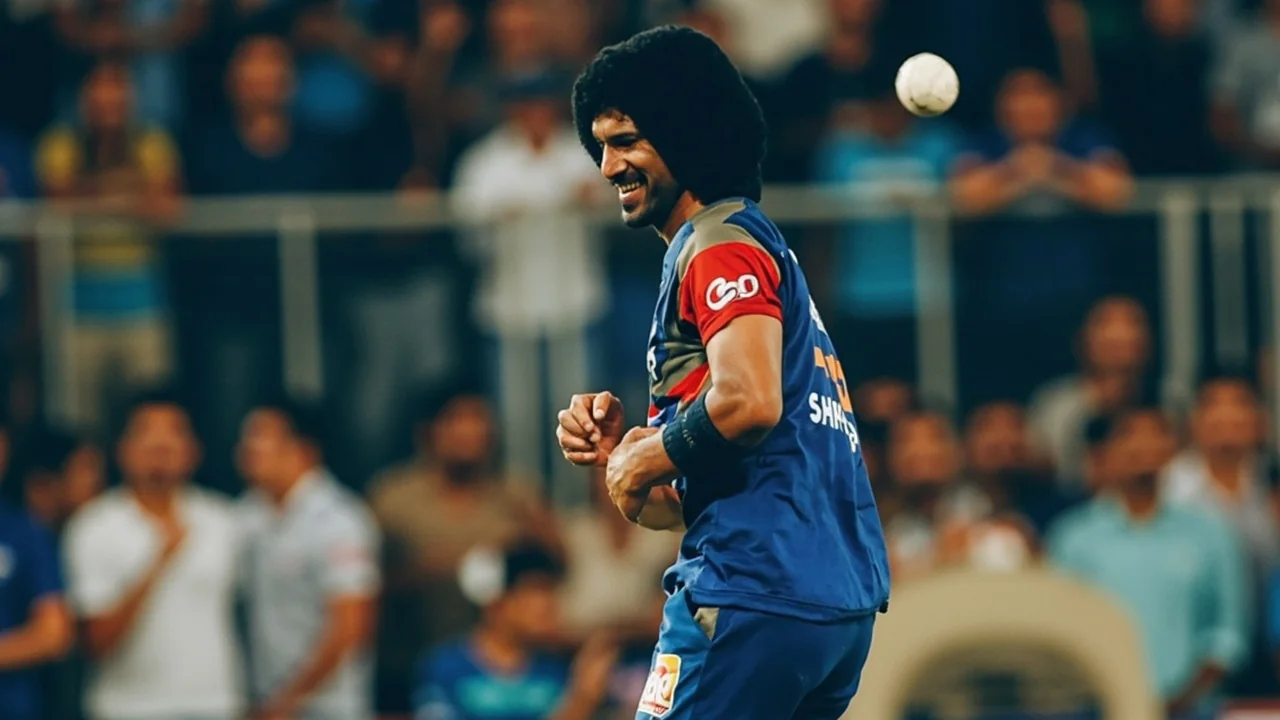
An IPL bowler at the crease of a high-leverage moment — the kind of frame the Mumbai Indians season kept producing, just not in their favour.
The season record: eight in eleven, and the worst finish outside the four
The rawest summary of the campaign is the win-loss line. Mumbai Indians finished the eleven confirmed matches with three wins and eight losses. That record places them among the worst-performing sides of the IPL 2026 cycle, and on a familiar historical footing. The five-time champions have finished last on the IPL table twice since 2021 — the seasons that bookended the 2022 and 2024 title droughts — and they went into the Raipur fixture needing results elsewhere to avoid a third bottom-placed finish, with three fixtures still to play.
The qualification window closed in the most MI-shaped fashion possible. Even in the years when they have missed the playoffs, the franchise has usually produced one match-of-the-season performance in the run-in. The Raipur chase was that kind of contest, and they still lost. The combination of an under-par batting card, an overworked bowling unit and a piece of last-over fortune in the opponent's favour is the kind of loss that defines an elimination more clearly than a rout.
For fantasy IPL players the eleven-match record matters in two directions. First, it confirms that the playoff question was effectively settled weeks before the Raipur fixture; the MI ownership percentage on most fantasy boards had already collapsed, and the marginal team-builder had stopped allocating captaincy credits to the MI core. Second, it sets a clean reference point for the IPL 2027 auction cycle. Players whose draft price was anchored to MI reputation, rather than to current form, finished the cycle as clear overpicks. Yadav, Bumrah and Pandya all belonged in that group.
Jayawardene's biggest regret: the injury list that ran the season
Mahela Jayawardene, the MI head coach, used his post-match press remarks in Raipur to name injuries as his single biggest regret of the campaign. The list he ran through was unusually long for a Mumbai Indians season, which is itself a tell. MI are usually one of the fittest and best-resourced squads on the IPL medical side; an injury list of this length in 2026 was therefore structural, not operational.
Three named absences dominated the picture. Rohit Sharma missed six consecutive matches with a hamstring injury — a stretch long enough that the franchise had to rebuild the entire top-order structure without their senior opener. Hardik Pandya, the captain and lead all-rounder, missed two matches because of back spasms — the contests against Lucknow Super Giants and Royal Challengers Bengaluru — and played through discomfort in others. Mitchell Santner missed time with a shoulder injury that pulled the frontline spinner out of the XI for a phase of the season.
The combined effect was that MI played at least three different starting XIs across the eleven matches, with different overseas combinations, different middle-order structures and different bowling units depending on who was available. The fantasy read is straightforward: any team with three senior injuries in the first eleven matches of a season has already lost the consistency premium that franchise captains pay for in the auction room. For IPL 2027 fantasy pricing, the takeaway is that durability, not reputation, has to be the first filter on the MI draft board.
Where the three stars fell short: Yadav, Bumrah, Pandya
The MI squad for IPL 2026 was, on paper, one of the strongest in the league. Rohit Sharma, Suryakumar Yadav, Tilak Varma, Ryan Rickelton, Jasprit Bumrah, Trent Boult and Hardik Pandya is the kind of generational line-up that any franchise in the world would build around. The numbers behind the elimination were therefore not a story about a weak squad. They were a story about a strong squad that produced, individually, one of its worst combined seasons.
Yadav, the IPL's previous-season Most Valuable Player, finished the eleven innings with an average of 17.73. That is his worst mark since 2017, and it came on the back of a first-ball duck in the Raipur eliminator itself. A T20 batter averaging 17.73 across eleven innings is, in fantasy terms, a slot that should be filled from form not reputation. The lesson for IPL 2027 is that even a reigning MVP can carry a 20-point season into his next cycle; auction rooms that anchor on the previous year's MVP status, rather than the previous three matches of form, will get Yadav's average wrong.
Bumrah's quiet stretch was the more unexpected story. Across eleven innings he took only three wickets at an economy of 8.51, with a best of 1 for 15, and he failed to take a wicket in the first five matches of the season. For a bowler whose fantasy value is anchored on wicket-taking and economy bonuses, that is a near-complete zero. Bumrah had been the most reliable fantasy captaincy slot in the IPL for several cycles, and his IPL 2026 numbers were the first serious reminder that even the highest-floor death bowlers can have a flat season.
Pandya's case was the most nuanced. Across eight innings he scored 146 runs and took four wickets, with an economy approaching twelve — a number that, on a fantasy app that deducts for runs leaked, makes him a borderline hold even with the wickets. The combination of a bowling workload he could not finish the season carrying, and a batting output that did not offset the economy damage, is the clearest case study of the cycle: an all-rounder whose dual contribution both fell short.
Player
Role
Verified IPL 2026 number
Suryakumar Yadav
Batter
Average 17.73 across 11 innings; first-ball duck in Raipur
Hardik Pandya
All-rounder / captain
146 runs and 4 wickets across 8 innings; economy approaching 12
Jasprit Bumrah
Pace bowler
3 wickets across 11 innings; economy 8.51; best 1/15; no wicket in first 5 matches
Rohit Sharma
Top-order batter
Hamstring injury; missed 6 consecutive matches
Mitchell Santner
Spinner
Shoulder injury; missed a phase of the season
The table above is the verified factual ceiling for the three-star story. Any deeper number — strike rates, fantasy-point totals, ownership percentages — falls outside the scope of this retrospective and will be reported on its own merits by the Casumo India fantasy cricket desk when those stats are independently confirmed.
The final over in Raipur: Bawa, Bhuvneshwar and the 15 that mattered
The Raipur eliminator was decided on the final ball of the final over, with the match still in the balance and both sides playing for their season. Royal Challengers Bengaluru needed 15 runs to win, and Mumbai Indians had a choice to make about who would bowl it. According to Jayawardene's post-match comments, every experienced bowling option had already been exhausted, leaving the captain and coach to pick from a group that included the off-spinner Will Jacks, the teenager AM Ghazanfar, the unbowled Raghu Sharma and the rookie all-rounder Raj Angad Bawa. Bawa, who had not bowled a single over in his four previous IPL seasons, got the ball.
The over ran as follows: a wide to start, a no-ball that cost an extra run and a free hit, a wicket, another wide, and the six from Bhuvneshwar Kumar that ended the match on the last ball. The numbers inside that sequence — wide, no-ball, wicket, wide, six — are the kind of final-over ledger that defines an elimination. Mumbai Indians had, by Jayawardene's own description, no other option. The fact that the option they chose was a rookie who had never bowled in the IPL is, in itself, the clearest summary of how thin the bowling resources had become by the eleventh match.
Jayawardene defended the call. His point, made publicly and without qualification, was that the experienced options were unavailable or already bowled out. The defence is fair on its face, but it also confirms the structural fact: the bowling unit was not deep enough to absorb a single senior injury, let alone the three that ran through the season. For fantasy team-builders, the read is the same read as for the squad-builders. Depth is the asset that wins seasons, not star quality. A franchise with three frontline stars and no bench has, in effect, played a one-innings-per-match contest for the entire campaign.
The final-over moment in Raipur — the bowling hand belonged to a rookie, the chase belonged to RCB, and the season belonged to neither MI.
Why this Mumbai Indians lineup still finished outside the four
The Mumbai Indians squad for IPL 2026 is the same lineup the franchise has been building around since the 2024 cycle, with one generational addition in Tilak Varma and one overseas wicketkeeper in Ryan Rickelton. On paper, it is the strongest MI squad since the 2020 title win. On the table, it is one of the two worst MI seasons of the last five. The gap between the squad on paper and the squad on the field is the most important question the franchise takes into the next cycle.
Three structural factors explain the gap. First, the injury list kept the franchise from fielding its preferred XI in more than half the matches. Second, the form dip of the three stars dragged down both the batting and bowling output in the same window. Third, the absence of a settled overseas spinner behind Santner meant the bowling unit had to absorb more overs from the part-time options, which pushed the economy numbers of every frontline bowler up by half a run. The combination of those three factors produced a campaign that looks, in retrospect, almost predetermined.
The fantasy implication is broader than the MI-specific question. Across the IPL 2026 cycle, fantasy boards that anchored too heavily on franchise reputation got two kinds of prices wrong: the MI stars, who had a down year, and the RCB rebuild, which used the early-season form to climb the standings. The lesson is that auction rooms and fantasy boards both reward teams that pick on current form, not on the names that owned the previous season's trophies. For IPL 2027 draft boards, the Mumbai Indians elimination is a reminder to price reputation only as far as the last confirmed three matches can carry it.
What the elimination leaves behind
A retrospective is, by definition, a record of what happened rather than a forecast of what comes next. The Mumbai Indians' IPL 2026 elimination on 11 May 2026 is now part of the franchise record, alongside the five title wins, the two last-place finishes since 2021, and the 17-year arc between the 2013 and 2020 trophies. The legacy of the 2026 cycle is not yet fully written — three fixtures remain on the schedule, and the IPL 2027 auction is several months away — but the retrospective facts are clean: eight losses in eleven, three senior injuries that ran the season, three stars who under-delivered on their floor, and a final-over sequence in Raipur that closed the door on the campaign.
For the IPL Players coverage on the Casumo India desk, the elimination is one piece in a larger IPL 2026 picture. The squad questions, the ownership recalibration and the IPL 2027 draft conversation will be tracked in separate retrospectives and previews as the data becomes confirmed. For now, the May 11, 2026 elimination stands as the verified record. The next time Mumbai Indians take the field, the contest that begins will be the contest that decides whether the 2026 cycle ends in eighth place or seventh. The chance of a fifth title is gone.
For the full picture on the MI squad and the wider IPL 2026 player pool — including role-by-role reads, ownership band breakdowns and the captaincy logic that the IPL 2026 cycle has produced — the IPL Players coverage on the Casumo India desk at casumoindia.com/players is updated through the season, with every retrospective anchored to a confirmed, dated source.
Welcome to Casumo India
New users can activate a Rs 100 free contest entry with the IPL 2026 sign-up code.
CASUMO100
Frequently asked questions
When were Mumbai Indians eliminated from IPL 2026?
Mumbai Indians were eliminated from IPL 2026 on 11 May 2026, after a last-ball, two-wicket defeat to Royal Challengers Bengaluru in Raipur. The loss left MI with eight defeats in eleven matches, placing them outside the top four with three games to spare and confirming a season that finished among the worst-performing of the cycle for the five-time champions.
How did Mumbai Indians lose the Raipur eliminator?
Royal Challengers Bengaluru needed 15 runs in the final over to win, and the over was bowled by Raj Angad Bawa — a rookie all-rounder bowling for the first time in his four-year IPL career. The over yielded a wide, a no-ball, a wicket, another wide and the Bhuvneshwar Kumar six that ended the match on the last ball, with RCB getting home by two wickets.
What did Mahela Jayawardene say was his biggest regret?
Head coach Mahela Jayawardene cited injuries as his biggest regret of the campaign. He named Rohit Sharma's hamstring issue that kept the opener out for six consecutive matches, Hardik Pandya's back spasms that ruled the captain out against LSG and RCB, and Mitchell Santner's shoulder injury as the three absences that forced the most selection-table changes.
How did Suryakumar Yadav perform in IPL 2026?
Suryakumar Yadav, the previous season's Most Valuable Player, finished the eleven innings with an average of 17.73 — his worst mark since 2017. The campaign included a first-ball duck against RCB in the Raipur eliminator and was a clear reminder that even a reigning MVP can carry a below-average season into his next auction cycle.
How did Jasprit Bumrah perform in IPL 2026?
Jasprit Bumrah took only three wickets in eleven innings at an economy of 8.51, with a best of 1 for 15. He failed to take a wicket in the first five matches of the season, marking the quietest stretch of his IPL career and a clear recalibration point for fantasy draft boards heading into the IPL 2027 auction.
Why did MI bowl Raj Angad Bawa in the final over?
Jayawardene defended the choice by saying every experienced bowling option had already been exhausted by the final over, leaving only the spinners Will Jacks, AM Ghazanfar and the unbowled Raghu Sharma, alongside Bawa. Bawa had not bowled in any of his four previous IPL seasons, which made the choice a structural consequence of the season-long bowling shortage.
Where can I follow the rest of the IPL 2026 player coverage?
The Casumo India news desk tracks every IPL 2026 player and franchise through the cycle, with retrospective reads anchored to confirmed, dated sources. Player-by-player profiles, role reads, ownership band breakdowns and captaincy logic are all tracked through the Casumo India news desk and the IPL coverage pages on the site.