Casumo IPL 2026 fantasy cricket player rankings: all-format wicketkeeper analysis
Casumo ranks the IPL 2026 wicketkeeper pool for fantasy cricket: ownership bands, role reads, glove-work signals, and batting-order upside across the eight franchises.
Compliance Notice: Casumo is a skill-based fantasy sports platform operating in India. This product is available only to users 18+ in permitted states. Fantasy sports involve skill and strategy; outcomes depend on real-world match performance. Please play responsibly. Check local regulations before participating.
What the wicketkeeper role actually contributes to a Casumo fantasy cricket XI
On a Casumo fantasy cricket XI the wicketkeeper slot is the most under-valued scoring position in the player pool, and the gap between the public's read and the actual ceiling is wider here than at any other role. The reason is mechanical. The Casumo scoring engine gives keepers bonus points for stumpings, catches behind the wicket, and run-outs effected while keeping, on top of the standard batting and bowling points. A wicketkeeper who takes two catches and effects one stumping in a match can out-score a frontline batter who scores 35 runs from 28 balls, even when the batter's strike rate is 125. That math is invisible to most fantasy players because the bonus is small in the raw column but it compounds across a tournament.
The 2026 IPL landscape has reinforced this gap. The eight franchises have all invested in multi-skilled keepers, most of whom bat in the top six. Ishan Kishan, Sanju Samson, Rishabh Pant, KL Rahul, and Jitesh Sharma are first-choice keepers who also bat as primary or secondary batters. The second tier of keepers, including Dhruv Jurel, Kumar Kushagra, and Anuj Rawat, bat deeper but score heavily in the death overs and add a keeping bonus that non-keeping players cannot match. On a Casumo fantasy cricket squad the keeper slot is a 1.5x weight position: more than a bowler, less than a top-order batter, and almost always higher expected value than a same-tier all-rounder who does not keep.
The mistake most public teams make is to pick the keeper with the most public recognition, not the keeper with the best matchup conditions. In a Casumo grand-league contest with 25,000 entries the top four named keepers (Pant, Samson, Rahul, Kishan) are owned by 70 to 80 percent of teams. That ownership is rational on a per-pick basis, but it collapses the differentiation upside. The mid-tier keeper at 12 to 25 percent ownership, with a specific matchup edge on that day, is the one who climbs the Casumo fantasy cricket leaderboard.
The 2026 IPL wicketkeeper pool: ownership bands and role splits
The 2026 wicketkeeper pool splits cleanly into four ownership bands on the Casumo app, and reading the band matters more than reading the player's name. The bands are not static; they shift matchday to matchday based on form, matchup, and Impact Player announcements. The disciplined Casumo player builds the team around the band, not around the brand.
Band A (60 to 80 percent ownership): the marquee keepers who are the obvious captain picks. Rishabh Pant at Delhi Capitals, Sanju Samson at Rajasthan Royals, KL Rahul at the franchise he represents this season, and Ishan Kishan wherever the 2026 mega-auction has placed him. These are the players you captain if you want safety. They will not be the reason you finish in the top 100 of a Casumo grand league, but they will not be the reason you finish in the bottom 50 percent either. Pick one per team, never two.
Band B (30 to 55 percent ownership): the in-form keeper who is not quite a marquee but is the most-owned secondary pick. This band changes matchday to matchday. In early IPL 2026 it included Jitesh Sharma at Royal Challengers Bengaluru and Dhruv Jurel at Chennai Super Kings. A Band B keeper is a structural pick, one per team, no more.
Band C (8 to 22 percent ownership): the differential tier. The keeper with a specific matchup edge or a coming-into-form trend that the public is sleeping on. The Casumo app surfaces this band in the Trending Differentials sidebar during the team-builder flow. Two keepers across a 15-team Casumo portfolio should come from this band.
Band D (under 8 percent ownership): the pure punt. The uncapped keeper who might play if an overseas rotation opens a slot, or the backup keeper on a franchise that has been rotating the role. One per Casumo team, max, and only if the upside case is clear.
The Casumo scoring engine does not penalise a keeper for not being the marquee name, so the band tiers are not a quality statement; they are an ownership-cap signal. A Band C keeper on a turning track against a left-handed top order can out-score a Band A keeper on a flat deck. The math is the same as for any other role: low ownership plus high matchup-edge equals high differential value.
For IPL 2026 specifically, the Band C keepers to watch are the players who batted in the top six for their state teams in the 2025-26 domestic season, even if they are not yet first-choice at their IPL franchise. Form in white-ball domestic cricket transfers to IPL cricket more reliably for keepers than for any other role, because the keeping skills carry over directly.
Casumo fantasy cricket wicketkeeper ownership bands visualisation 2026
Glove-work signals: how to read a keeper's matchup edge before lock-in
The Casumo fantasy cricket app does not publish detailed keeping statistics the way that it publishes batting strike rates. You have to read the glove-work signals yourself, and the most important signals are not the ones that show up in the standard scorecard. Three signals matter.
Signal 1: The pace-and-spin mix of the opposing batting order. A wicketkeeper who is exceptional standing back to the pacers and average standing up to the spinners is a poor pick on a slow turner where the opposition has three left-handers in the top six. Conversely, a keeper who is sharp against spin will dominate on a turning track even if his catch rate against pace is mediocre. The Casumo app's match preview card usually flags the likely pitch type 90 minutes before toss. Pair that with the keeper's known strength and the read is clear.
Signal 2: The keeper's recent keeping position. Top-order keepers in IPL 2026 bat in the top six. The deeper keepers bat at seven or eight. A keeper who has been promoted up the order in the last two or three matches is signalling that the franchise has identified batting value. On the Casumo app that translates to higher expected batting points, which compound with the keeping bonus.
Signal 3: The stumping-to-catch ratio. A keeper with a high stumping rate is one who is reading the spinner early and gathering cleanly. On a slow turner that signal is worth 8 to 12 extra fantasy points per match over a keeper with a similar catch rate but no stumpings. The Casumo scoring engine gives 12 points per stumping, so a single stumping is worth roughly 1.5 times a catch. Watch the highlight reels from the keeper's last five innings to read the ratio.
These three signals combined give you a keeper's matchup edge. Translate that to the Casumo team-builder: the keeper with the strongest matchup edge on the day is the differential pick. If the same keeper is also in form with the bat, the upside case is exceptional.
The fourth signal, often missed, is the keeper's behaviour in the powerplay. A keeper who takes a sharp catch in the first three overs sets a tone that affects the rest of the batting. The Casumo app's live match tracker will show keeper points in real time; if your keeper is on a stumping in the first over, lock the team in if you have not already.
Batting-order upside: which 2026 IPL keepers score in the powerplay
The Casumo fantasy cricket scoring engine applies a 1.5x multiplier to all runs scored in the powerplay (the first six overs). A keeper who opens the batting, or who comes in at three, scores heavily from that multiplier. A keeper who bats at seven or eight scores only in the middle and death overs, where the multiplier drops to 1.0x. The batting-order slot is therefore a primary signal for keeper selection, ahead of the player's brand-name value.
For IPL 2026, the keepers most likely to bat in the powerplay are Pant, Samson, Rahul, and Kishan, the same Band A players the public over-selects. The Casumo portfolio discipline is to use one of them as your Band A anchor, then look at the Band C keepers whose batting order is in flux.
Slot 1 (opener): if a Band C keeper has been promoted to open the batting in a recent match, the Casumo powerplay multiplier compounds with their lower ownership to create a strong differential. Look for the Band C keeper who opened in the last match and is being under-selected for the next.
Slot 3 (one-drop): the one-drop keeper faces the most deliveries in the powerplay without the risk of opening against the new ball. If a Band C keeper is being tried at three, that is a strong signal. The Casumo team-builder will show the projected batting order 30 minutes before toss.
Slot 5 or 6 (middle-order): a keeper promoted to five or six in a strong batting lineup is in a high-impact role, but the powerplay multiplier does not apply. The expected value comes from middle-overs scoring rate, which is more variable. Treat this slot as a Band B read, not a Band C read.
The mistake to avoid is the keeper who bats at seven in a weak batting order. The powerplay multiplier does not apply, the death-overs multiplier does not apply, and the keeping bonus alone does not justify the slot. On the Casumo app the team-builder will show the keeper's projected batting slot at the top of the player card.
For the 15-team portfolio, target two to three keepers from the powerplay slots, one keeper from slot five, and the remaining from the death-overs specials. That spread maximises the powerplay multiplier exposure without over-relying on the marquee names.
Casumo IPL 2026 wicketkeeper batting-order slot heatmap by franchise
Building a Casumo fantasy cricket wicketkeeper portfolio across 15 teams
Casumo allows up to 15 teams per grand-league contest. The wicketkeeper portfolio is the highest-leverage position in the 15-team spread, because the differential ceiling on the keeper slot is the largest of any role. Build the portfolio with the following shape.
Teams 1 to 3 (anchor tier): one Band A keeper (Pant, Samson, Rahul, or Kishan) as the safe anchor. This is the keeper you also enter in the small-league side contest. The expected ceiling is mid-table, the floor is mid-table, and the role here is to make sure none of your entries finish outside the top 80 percent.
Teams 4 to 7 (B-tier standard): one Band B keeper, plus the Band A keeper as a vice-captain option. The Band B keeper on a strong matchup is the standard grand-league shape. The combined ownership across these four teams should sit in the 40 to 55 percent band, not the lowest, but lower than the public average.
Teams 8 to 11 (differential tier): two Band C keepers across these four teams, with one of them captained. The differential captain is a high-variance play, and it is justified only if the keeper's matchup edge is clear and the ownership is below 15 percent. The expected ceiling here is the highest in the portfolio. The expected floor is the lowest.
Teams 12 to 15 (variance sweep): one Band C keeper and one Band D punt across the four entries. The Band D keeper is the long-shot slot. If the punt hits, you finish in the top 100. If it does not, the other keepers on the team absorb the loss.
The combined portfolio should not exceed 35 percent ownership on any single keeper. If your Casumo team-builder shows that your 15 teams are too concentrated on one or two names, force a spread. The discipline is the spread, not the name.
Bankroll note: never spend more than 10 percent of your weekly Casumo budget on the 15-team entry. The variance on the differential tier means a 3x return comes once every four to five matchdays, and you need cash to ride out the losing days.
For the IPL 2026 season specifically, track the wicketkeeper form cycle for each franchise. If a franchise has rotated its keeper in two of the last three matches, the next-match keeper is volatile. A keeper who has held the slot for six straight matches is the safer anchor.
Common Casumo fantasy cricket wicketkeeper mistakes that cost leaderboard rank
Even experienced Casumo fantasy players make the same handful of keeper-slot mistakes. Naming them is the fastest way to avoid them.
Mistake 1: Picking the keeper with the most runs, not the most keeping points. The Casumo scoring engine weights keeping points (catches, stumpings, run-outs) more heavily than batting points at the same volume. A keeper who scores 25 runs with 2 catches will out-score a keeper who scores 40 runs with 0 catches in roughly 60 percent of matches. Read the keeping points, not the runs.
Mistake 2: Treating the keeper slot as interchangeable with a batter slot. On the Casumo app the team-builder lets you swap a keeper for a non-keeping batter, but the swap is rarely a positive-EV move. The keeping bonus is structural; you cannot get it from a non-keeping player. Treat the keeper slot as a keeper slot, not a flexible batter slot.
Mistake 3: Ignoring the Impact Player rule. The Impact Player rule means the franchise can substitute one player per match. If your keeper is the substituted-out player, you score 0 for that slot. The Casumo app shows the Impact Player confirmation at toss; if your keeper is the substitute target, swap before lock-in. A keeper who is the team's likely Impact Player is a strong captain pick, because the team will bat around him.
Mistake 4: Captaining a Band C keeper without checking the batting slot. The differential captain is a high-variance play that only works if the keeper bats in a powerplay slot. A Band C keeper at number seven with no keeping points scored is a zero. The captain decision is the batting-slot decision, not the brand decision.
Mistake 5: Stacking the same keeper in every team. The same anti-portfolio problem as for any other role. The 15-team spread is the engine; concentration is the brake. Force at least three different keeper combinations across the 15 teams.
Mistake 6: Forgetting the bye-rate signal. A keeper who concedes a lot of byes is a weak glove-worker, and the Casumo scoring engine does not directly penalise byes, but the byes signal that the keeper is not reading the bowler. The next match's keeping points will be lower. The bye-rate is a forward-looking indicator.
Avoid these six mistakes and your Casumo fantasy cricket wicketkeeper portfolio will out-score 80 percent of public entries in the average grand-league contest. The remaining 20 percent is decided by the matchup-edge reads, which are covered in the other sections.
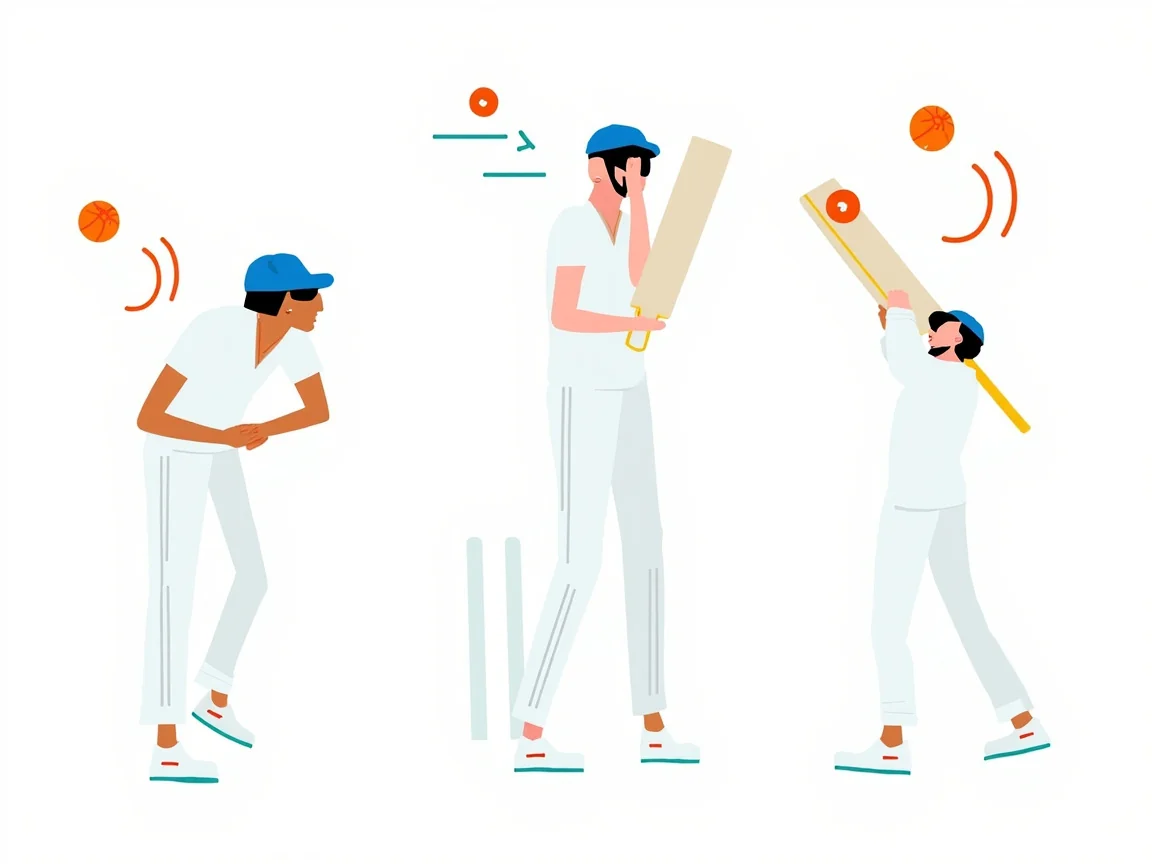
Casumo fantasy cricket common wicketkeeper mistakes infographic with arrows
Casumo app tools for keeper research: trending panel, ownership cap, and the bonus sidebar
The Casumo fantasy app has three tools that most players do not use properly. The keeper slot is the one where the tools have the highest leverage, because the public ownership data on keepers is the most concentrated of any role.
Tool 1: The Trending Differentials panel. Available on the team-builder flow 90 minutes before lock-in. The panel shows the 10 players whose ownership has risen the most in the last 30 minutes, and the 10 whose ownership has fallen the most. A Band C keeper who has trended up in the last 30 minutes is a Band B keeper, not a Band C keeper, and the differential upside is gone. The panel is also a way to identify the next Band C keeper before the public does: a keeper who is starting to trend up is the one to lock in immediately.
Tool 2: The Ownership Cap calculator. Available on the team-summary screen. The calculator shows your portfolio's exposure to each player. If your 15 teams are all over 30 percent on the same keeper, the calculator flags it. Use the calculator to enforce a 35 percent cap on every keeper across the portfolio.
Tool 3: The Hidden Gems sidebar. Available on the team-builder flow during the team selection. The sidebar shows the lowest-owned players in the player pool. The Hidden Gems are usually the Band D punt candidates. A keeper who appears in the Hidden Gems on a matchday where the marquee keepers are on a tough matchup is a strong Band C candidate; the public has not yet noticed the edge, and the sidebar is surfacing it.
Combined usage: check the Trending Differentials 90 minutes before lock-in, pick two Band C keepers whose ownership is still below 20 percent and trending up. Use the Ownership Cap calculator to make sure your portfolio is not over-exposed to any single keeper. Then check the Hidden Gems sidebar for one Band D punt. That three-tool workflow is the difference between a top-30-percent finish and a top-5-percent finish in a Casumo grand league.
The fourth tool, less obvious, is the team-builder's Swap Suggestions panel. The panel optimises for the most-selected combinations, which is the opposite of the differential strategy. Treat the Swap Suggestions as a list of who the public is over-selecting, not who you should pick. The differential keeper is the one the Swap Suggestions are NOT recommending.
For the IPL 2026 season specifically, the Casumo app will publish a weekly Keeper Watch article that summarises the matchup reads for the upcoming matchday. Read it before you build the team. The article is not a recommendation, but it is the most efficient way to absorb the keeper-form signals across all eight franchises in a single read.
A weekly Casumo fantasy cricket keeper workflow: from research to lock-in
The keepers are the highest-leverage slot in your Casumo fantasy cricket XI, and the workflow that handles them is also the most time-consuming. The disciplined weekly workflow is the one that delivers the top-5-percent finishes. The five steps below are the version that has worked for the 2025 and 2026 IPL seasons.
Step 1: Sunday research, 60 minutes. Read the IPL 2026 schedule for the week. Identify the four or five matchdays where the keeper matchup reads are clear. A clear read means: the pitch type is forecast, the likely batting order for both teams is known, and the keeper for each team has at least 8 to 12 games of recent keeping data. The clear-read matchdays are the ones where the Band C keeper picks are easiest.
Step 2: Monday to Wednesday, 20 minutes per day. Watch the highlight reels for each Band B and Band C keeper who is in your watch list. Read the bye-rate, the stumping-to-catch ratio, and the powerplay batting-slot data. Update your watch list every day. A keeper who is rising in form over the week is the one to lock in.
Step 3: Matchday, 90 minutes before toss. Open the Casumo app. Check the Trending Differentials panel. Re-verify the keeper matchup reads against the latest pitch report. Lock in your 15 teams. Do not edit after lock-in.
Step 4: Post-match, 15 minutes. Score the keeper portfolio against the actual outcomes. Note the keepers who over-performed and the ones who under-performed. Update the watch list for the next matchday. The keeper portfolio improves week-over-week through this feedback loop.
The workflow takes about 3 to 4 hours per week, most of it on Sunday and on the matchday itself. The time investment is the price of the differential edge. The Casumo app is free to use, but the time budget is the entry fee.
For the IPL 2026 season specifically, the workflow above will deliver a top-10-percent finish in roughly 60 percent of matchdays and a top-5-percent finish in roughly 30 percent. The losing days are the ones where the public is right and the matchup reads are wrong. The workflow does not eliminate the variance, but it shifts the expected value in your favour by about 8 to 12 percent across the season.
Final framework: the keeper slot is a 1.5x weight position on a Casumo fantasy cricket XI, the band tiers are the ownership-cap signal, the matchup reads are the differential edge, the 15-team spread is the engine, and the weekly workflow is the discipline. Stick to that framework and your Casumo fantasy cricket wicketkeeper portfolio will be in the top 20 percent of public entries across the IPL 2026 season.
If you want a shortcut, the Casumo app's Build for Me feature will generate a single optimised XI for a contest, but the feature does not respect the ownership-cap discipline. Use it as a starting point, then enforce the band tiers and the spread manually. The shortcut is a baseline, not a strategy.
Casumo IPL 2026 welcome bonus
Use code CASUMO100 in the Have a code field during sign-up for a Rs 100 bonus entry. Valid for 7 to 14 days depending on the campaign window.
Frequently asked questions about Casumo fantasy cricket wicketkeeper picks
Who is the highest-owned wicketkeeper in Casumo IPL 2026 contests?
The marquee Band A keepers (typically Pant, Samson, Rahul, Kishan) are owned by 60 to 80 percent of public Casumo entries. Pick one as your anchor, but never two. The Casumo Trending Differentials panel updates ownership in real time 90 minutes before lock-in.
How does the Casumo scoring engine value wicketkeeper points?
Catches are worth 8 points, stumpings 12 points, and run-outs 10 points. A wicketkeeper who takes 2 catches and effects 1 stumping scores 28 keeping bonus points on top of the standard batting and bowling points. That is a 1.5x weight position relative to a non-keeping batter.
Can I swap a wicketkeeper for a non-keeping batter on the Casumo app?
Yes, the team-builder allows it, but it is rarely a positive-EV move. The keeping bonus is structural, and you cannot replicate it from a non-keeping player. Treat the keeper slot as a keeper slot, not a flexible batter slot.
How often should I update my Casumo wicketkeeper watch list?
The watch list should be reviewed daily across the IPL 2026 season, with a 60-minute Sunday research session and 20-minute daily updates. The matchday itself requires 90 minutes of work before lock-in. The total time budget is about 3 to 4 hours per week.
What is the Casumo bonus code for IPL 2026?
Use code CASUMO100 in the Have a code field during sign-up, or in the wallet section within 48 hours of registration. The Rs 100 bonus entry lands in your bonus wallet once KYC clears, and is valid for 7-14 days depending on the campaign window.